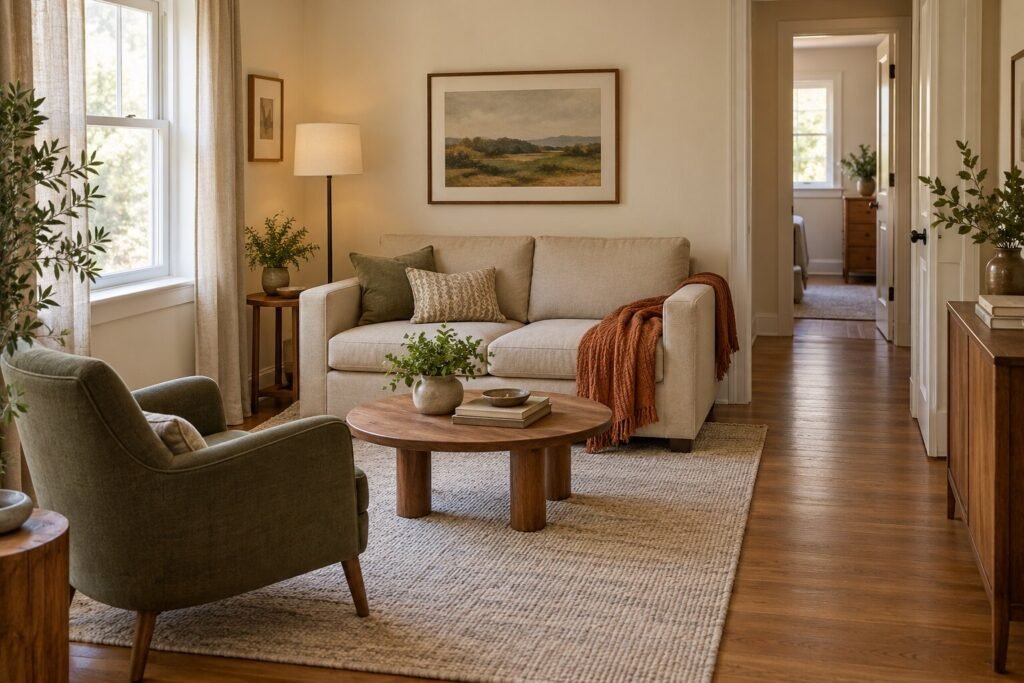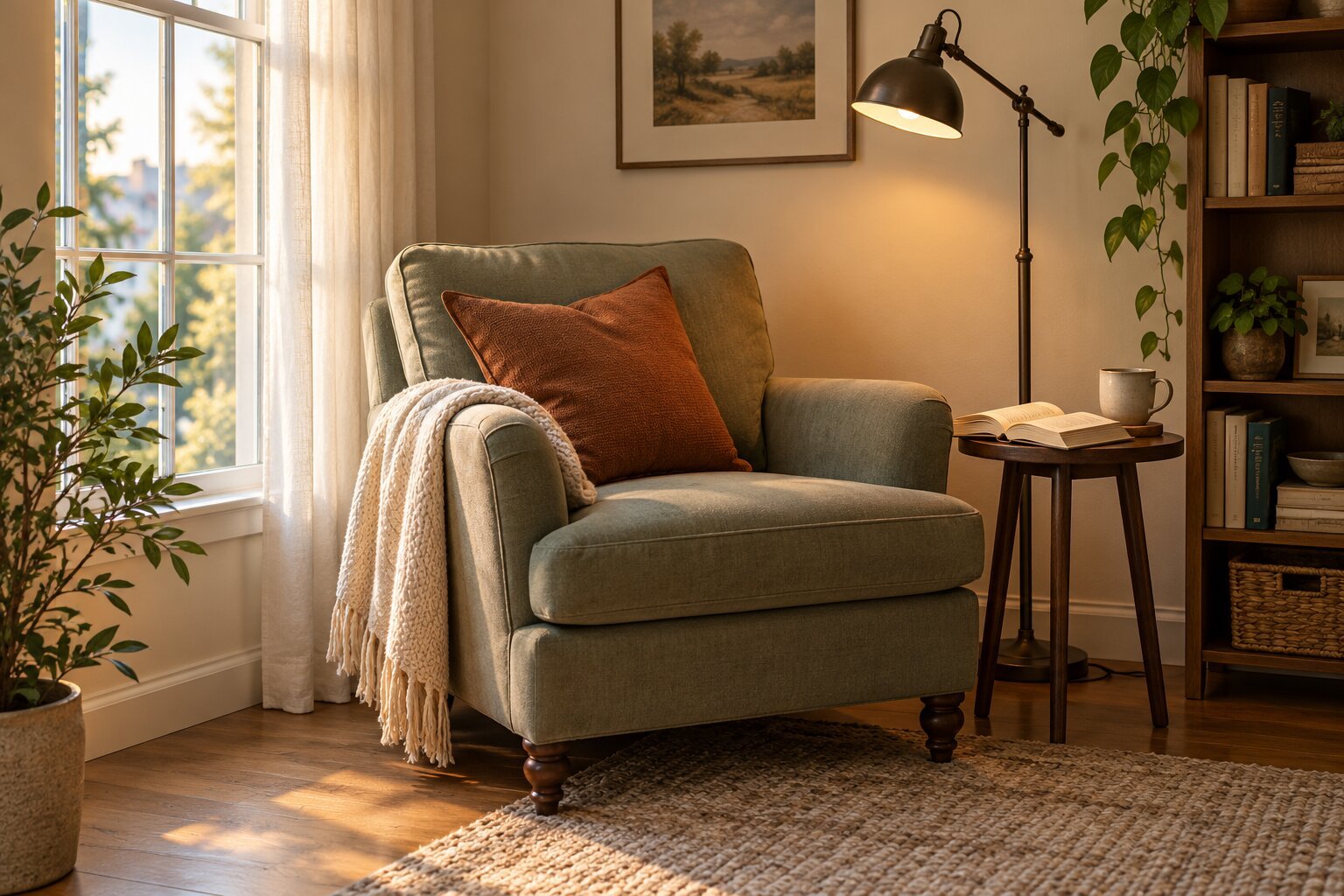
A useful reading spot starts with a comfortable seat, a light on the page and somewhere to put your book.
A cozy reading corner does not need a spare room or a built-in window seat. It can be the chair near the sofa, an unused end of the living room or a seat beside a bedroom window. The important part is that you can sit there, see the page and settle in without rearranging half the house.
Begin with furniture you already own. Test the place at the time you normally read, then add only what solves a real problem. That approach helps you avoid buying a chair that looks lovely but leaves no room to stand, or a lamp that glows in the background while the book stays in shadow.
The steps below build a reading spot in a small living room without construction. You will choose the position, check the seat, arrange the practical pieces and finish with a short reading trial. Colors and style can follow your taste. Comfort, access and useful light are the parts to settle first.
1. Choose a quiet spot outside the main route
Look for a position where passing people will not brush the seat or step over your feet. A corner near a window can be pleasant, but check it when you actually use the room. Afternoon glare, a draft or a loud television may change your choice.
If the chair would interrupt a doorway, solve the route first. Our small living room layout guide can help you sketch a workable place before you move furniture.
2. Test a seat you already own
Sit with the book you plan to read. Notice whether your feet feel supported, whether you keep shifting and whether the arms leave room to hold the book comfortably. A cushion behind your back may help; a pile of cushions that pushes you off the seat will not.
Stay there for about 10 minutes as a first check. This is a practical trial, not a comfort standard. If the chair still feels wrong after small changes, try another seat before buying accessories.
3. Set a stable surface within reach
Put a small table beside the arm you naturally reach toward. Test the reach while seated with your back supported. You need enough room for the things you use, perhaps a book and a drink, rather than a surface filled with decoration.
Use a table you already have when possible. A stack of loose books is not a good substitute for a stable base under a hot cup. Keep the area where you stand up clear.
4. Aim a lamp at the page
Place the reading light where it lights the book without shining straight into your eyes. Sit down with the lamp on and adjust the shade or position until your hands and head are not casting an annoying shadow on the text.
A window may provide enough light by day, but repeat the check after dark. Use a bulb that fits the fixture’s rating and instructions. Keep cables out of walking routes and avoid balancing a lamp on an unstable surface.
5. Keep a few books close to the seat
Choose your current read and a small next-up stack. A nearby shelf or basket can hold them without adding a full bookcase to a tight corner. Leave enough space to pick up a book without moving a vase or lamp first.
Separate books you use here from the rest of your collection. The reading spot works better when storage supports the habit. It does not have to display every title you own.
6. Add the texture you will use
A throw earns its place when the room gets cool. One cushion can add color and support if the seat needs it. Start with those useful layers and leave the rest of the chair available for sitting.
For a calm combination, repeat one color from the room in a cushion or blanket. A patterned textile can do the same job. A rug is optional; skip it if it bunches, slips or makes the route harder to use.
7. Try the corner during your usual reading time
Read there for a short session with the room in its normal state. Turn on the television if someone usually watches it nearby. Notice whether the light, temperature, noise and table position let you settle.
Change the first thing that interrupts you. Move the lamp if the page is shadowed; shift the table if you keep reaching too far. A cozy reading corner becomes useful through these small adjustments, not through getting every accessory right at once.
Adapt the setup to the space you have
At the sofa’s end
Use the end seat, a side table and a nearby lamp. Keep a bookmark in the table drawer so the spot can return to shared seating after you read.
Beside a window
Angle the chair for the daylight you like. Keep the window and curtain usable, and add a lamp for the hours when natural light fades.
In a shared corner
Use a small basket for your current book and a movable side table. Put them close when you read, then return them without blocking the household’s route.
When the corner still does not feel comfortable
| If this happens | Try this |
|---|---|
| Your body blocks the light | Shift the lamp to the other side and recheck the open book. |
| The chair feels crowded | Remove an extra cushion or table before adding another item. |
| Books pile up on the floor | Keep only the current read beside the seat; return finished books to their main storage. |
| You never sit there | Test the seat and location again. An attractive corner may be too far from your everyday routine. |
Questions about a small reading nook
Do I need a special reading chair?
No. A chair or sofa seat that feels comfortable for you is a good starting point. Test what you own before deciding a different chair would solve the problem.
Can I make a reading corner without a window?
Yes. Choose a place with useful light from a suitable lamp, then check the page while seated. Natural light is pleasant when available, but it is not a requirement.
What can I leave out in a very small room?
The extra rug, footstool and full bookcase are optional. Start with the seat, a stable reachable surface and light that helps you read.
Keep the parts that made reading more comfortable and remove the pieces you keep working around. For the rest of the room, explore our small changes for a cozier living room. Save this cozy reading corner plan to Pinterest for your next quiet afternoon.
Further reading: IKEA’s reading-corner ideas pairs comfortable seating with a small table, nearby books and useful layers. The order, reading trial and troubleshooting above are our suggested method. No retailer product is required.
Images are original AI-generated concept illustrations for Refind Trends. They show possible arrangements, not measured floor plans or documented home makeovers. Editorial policy · Questions or corrections