Photo: Kevin Lieder / Unsplash.
A room can feel more inviting without a new sofa or a full makeover. Start with how you use the space, then change one thing at a time.
In this story Jump to a section +
Cozy means different things to different people. For some it is a clear coffee table and a comfortable reading light; for others it is color, layered textiles, and a shelf full of favorite objects. The ideas below work best when you adapt them to your routines, your space, and what you already have.
1. Give the room one clear purpose for the evening
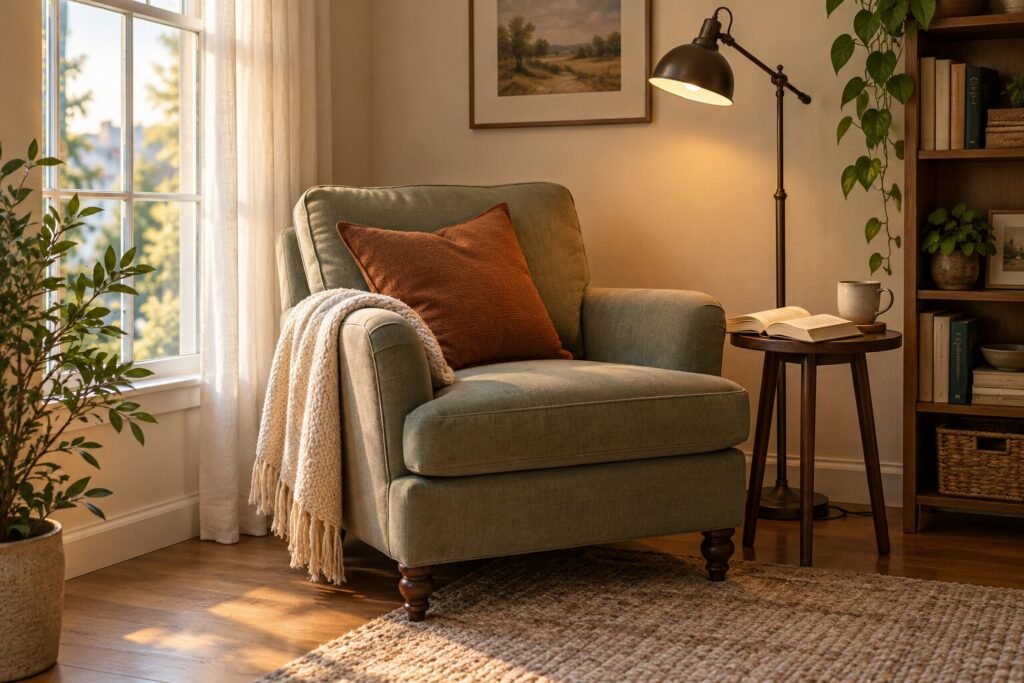
A living room may do several jobs during the day. In the evening, choose the activity you most want it to support: reading, talking, watching a film, or playing with children. Place the things for that activity within easy reach. Moving a book and a lamp beside your favorite chair can be more useful than adding another decorative object.
Keep pathways open, especially around doors and between seats. If a table is always in the way, try moving it before assuming you need a smaller room or a different sofa.
2. Use more than one source of light
If the room relies on a single overhead light, try switching on a table or floor lamp you already own. A lower light source can make a seating area feel distinct from the rest of the space. Use a brighter task light where you read or work, and choose bulbs compatible with the fixture and its stated limits.
Before buying a lamp, test its likely position with an existing one. Keep cables away from walkways and follow the manufacturer’s placement instructions. A cozy arrangement should still let you see and move safely.
3. Bring one comfortable texture into reach
A throw is most useful where someone can actually use it. Fold it over an armrest or place it in an accessible basket rather than arranging it so precisely that nobody wants to touch it. If you already have cushions, swap their positions or covers before adding more.
Mixing a soft textile with a smoother surface can create interest without lots of pattern. Choose fabrics that suit the people and pets using the room, including how easily they can be cleaned.
4. Make the seating conversation-friendly
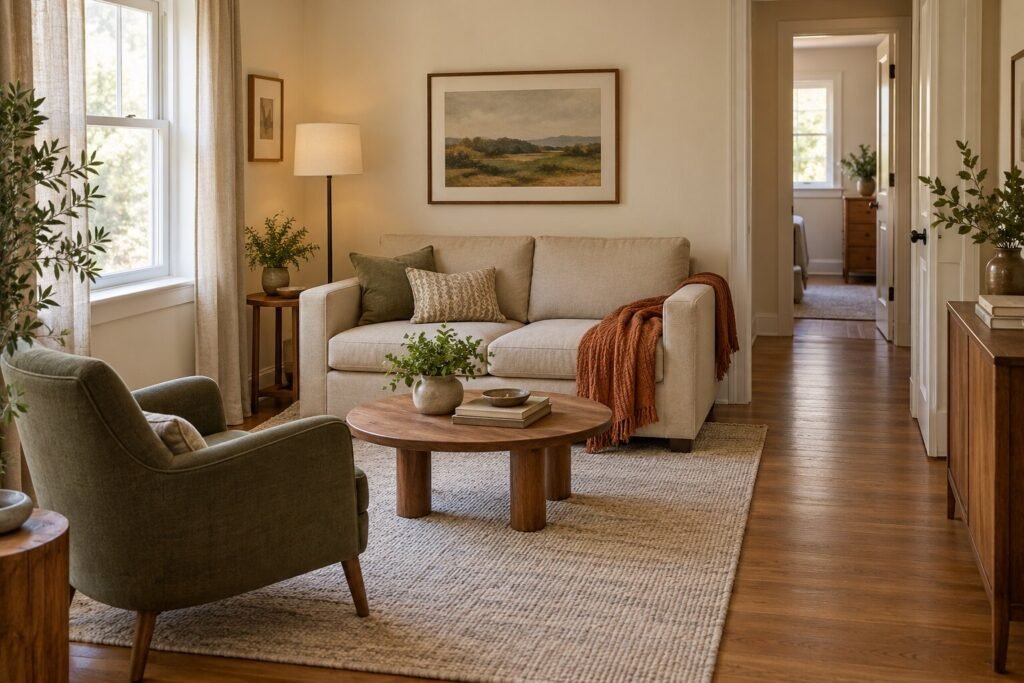
Where the layout allows, angle a chair toward the sofa rather than lining everything along the walls. You do not have to create a formal arrangement; a small shift can make talking feel more natural. Sit in each place and check whether a drink or book has somewhere stable to rest.
In a narrow room, keep a clear route through the space. A move that looks good in a photograph may be frustrating if everyone has to squeeze past it.
5. Let personal objects do some of the decorating
A stack of books you read, a framed photograph, or a bowl from a memorable trip can give the room more character than a matching set of accessories. Group a few objects together and leave some empty space around them. That makes each one easier to see and keeps surfaces useful.
If a shelf feels crowded, move a few objects to storage and rotate them later. You can refresh the room by changing what is visible rather than buying something new.
6. Soften the window area thoughtfully
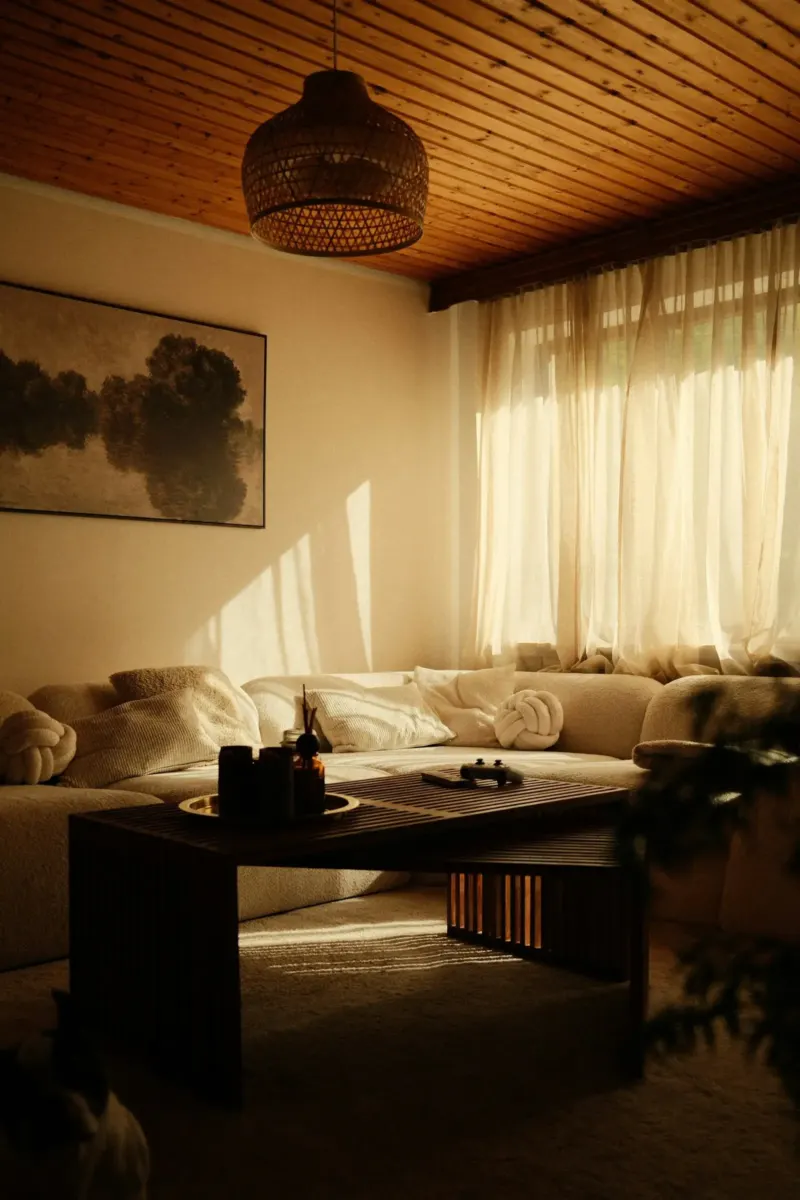
Open curtains during the day to make the most of the light you have. In the evening, closing them may make the room feel more settled. If you are considering new window coverings, measure carefully and think about privacy, cleaning, and how the fabric will fall around furniture.
Keep textiles clear of heaters and follow safety guidance for any cords or fittings. The right choice is the one that suits the room’s practical needs as well as its appearance.
7. Reset the room in five small steps
Clear one main surface, return objects to their usual places, straighten the seating, put a useful textile within reach, and choose the lighting for the evening. This is a suggested sequence rather than a timed challenge. Do as much as helps and leave the rest for another day.
After a week, notice which changes made the room easier to enjoy. Keep those and let the others go. A considered home grows from how you live in it, just as a useful wardrobe grows from what you wear. If that approach appeals, explore our guide to a smaller, more practical wardrobe.
Have a question or spot a detail we should correct? Contact the editor. Back to the beginning ↑
Illustrative stock photography by Kevin Lieder on Unsplash, used under the Unsplash License. Read our editorial policy.