Photo: Mathilde Langevin / Unsplash.
Start with two pieces you already enjoy. A little space between them often does more than adding a third or fourth necklace.
In this story Jump to a section +
Layered jewelry can look elaborate in a close-up, but an everyday version can be very simple. You are arranging a few shapes against the clothes you are wearing, rather than following a strict set of rules. The most useful combination is one that feels comfortable, works with your neckline, and does not need constant adjusting.
Choose one necklace to lead
Pick the piece you want to notice first: a pendant, a strand of beads, or a chain with an interesting texture. Add a quieter necklace around it. If both pieces have large pendants or busy details, try wearing them separately before deciding they need to be layered.
A fine chain and a small pendant make an easy starting pair. You can also reverse the balance with a substantial short chain and a very simple longer one. Look at the whole outfit in a mirror rather than judging only the jewelry close up.
Leave visible space between lengths
The exact measurements matter less than where the necklaces sit on you. Fasten both and see whether the lower edge of one overlaps the detail on the other. If they meet awkwardly, an extender may give you enough separation. The neckline of your top can change the effect, so check with the actual clothes you plan to wear.
When a pendant keeps disappearing into the neckline, move it clearly above or below the fabric. Letting it sit right at the edge often means adjusting it throughout the day.
Work with the neckline
A simple crewneck can create a background for chains worn over the fabric. With an open shirt, a short necklace can sit inside the opening while a longer pendant follows its shape. A square neckline may work best with a piece that stays comfortably within the opening rather than catching on the corners.
These are ways to experiment, not requirements. Try the combination, move around, and check whether the chains catch on buttons or textured fabric. Comfort and movement matter more than an ideal arrangement in a still image.
Mix metals with a small point of connection
If you like gold and silver together, use them together. You can repeat one metal in earrings or a ring to make the combination feel connected. A two-tone piece can also link the colors, but you do not need to buy one just to make mixing metals acceptable.
Another approach is to keep the necklace shapes related. Two fine chains in different metals may feel quieter than several heavy textures at once. If you prefer a bolder mix, start with your favorite piece and remove anything that competes with it in a way you do not enjoy.
Add texture before adding quantity
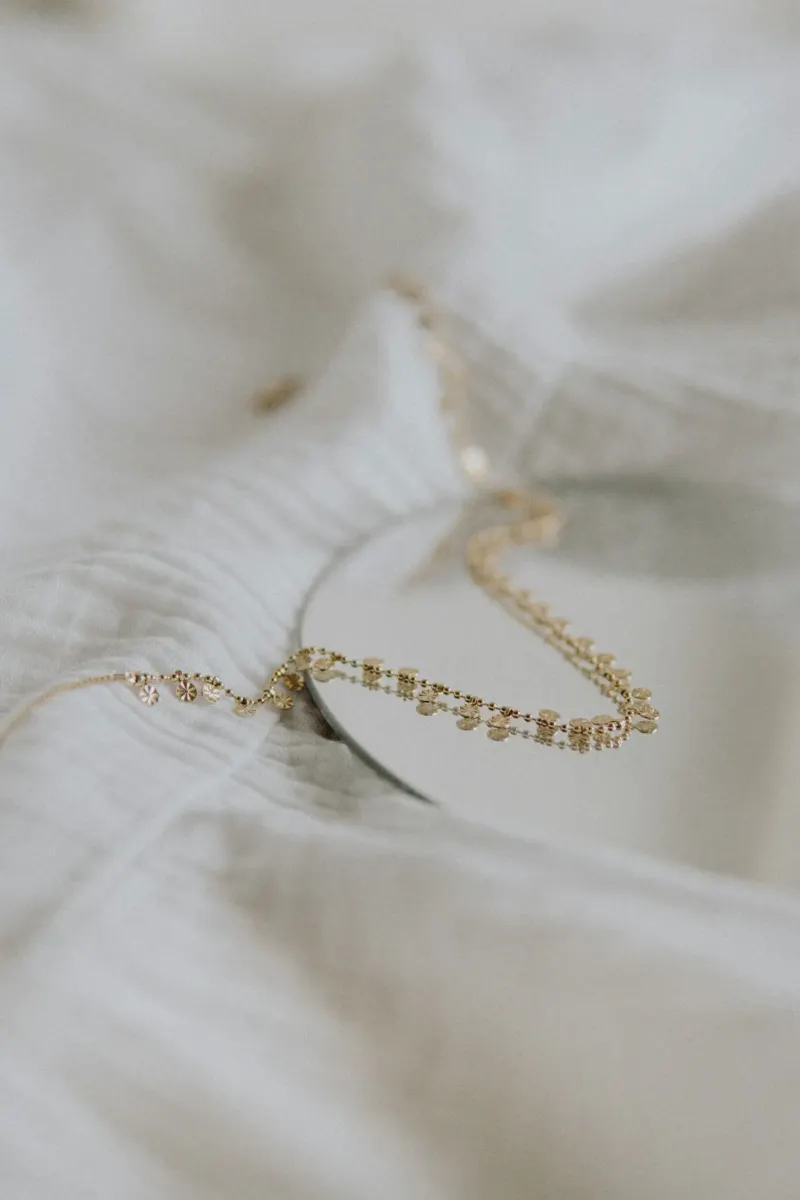
A smooth chain beside a beaded strand creates contrast without requiring lots of pieces. A delicate pendant against a wider chain can have a similar effect. Once the pair feels complete, stop there. There is no minimum number that makes jewelry look styled.
If you want a third necklace, choose a clear place for it: above the others, between two lengths, or lower down. If all three settle into the same position, return to two and see whether that solves the problem.
Reduce everyday tangles
Fasten each necklace separately and check the clasps before you leave. Very similar fine chains can wrap around one another as you move. Different lengths and chain textures may help, although no combination is guaranteed to stay tangle-free. A necklace separator is an optional accessory rather than an essential purchase.
Remove pieces before activities where they could catch, and follow the maker’s care instructions for the materials. When storing them, give each chain its own hook, compartment, or pouch so they do not begin the next day already tangled.
Try three simple combinations
- The everyday pair: a fine short chain and a small longer pendant.
- The texture mix: a plain chain with a beaded strand in a related color.
- The one-piece alternative: a single statement necklace with small earrings.
Use what you own first and take a photo of the combination you reach for most. The aim is a useful finishing detail, not a new task in your morning routine. Pair your jewelry with our easy fall outfit formulas, or build a connected clothing palette with the capsule wardrobe guide.
Have a question or spot a detail we should correct? Contact the editor. Back to the beginning ↑
Illustrative stock photography by Mathilde Langevin on Unsplash, used under the Unsplash License. Read our editorial policy.